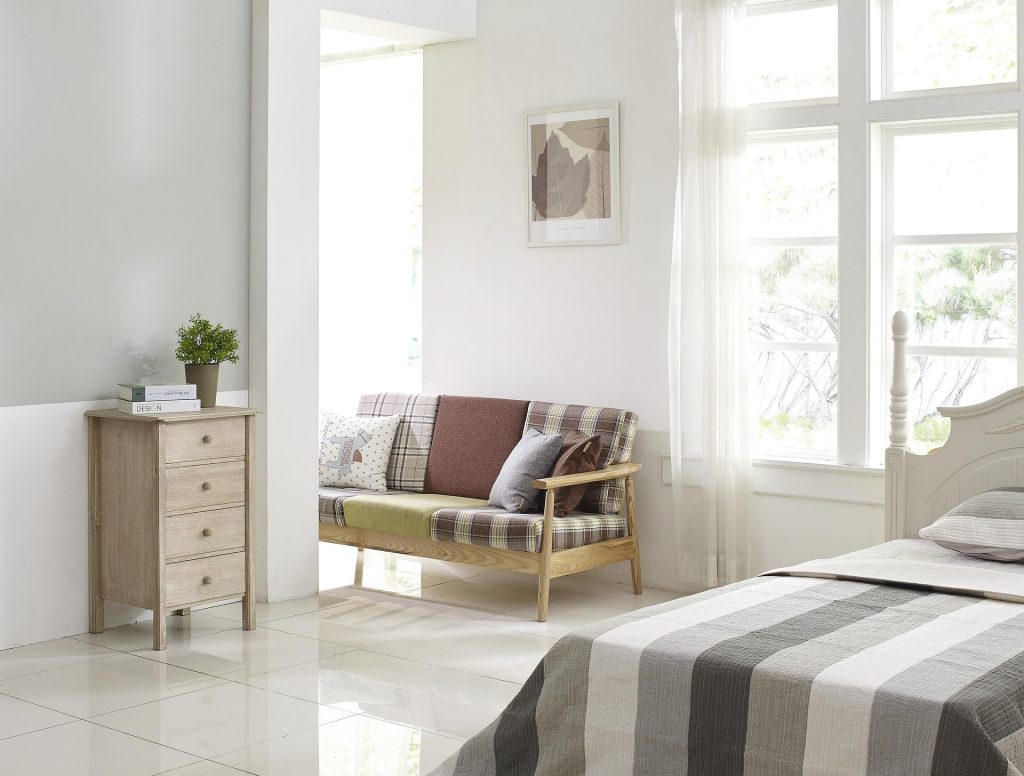
A small home does not automatically have to feel crowded.
amount of visible information competing for attention: objects left on
surfaces, furniture blocking movement, too many small storage containers,
unfinished tasks, and belongings that do not have a clear place to go.
When this happens, the natural response is often to buy more shelves, baskets,
boxes, or cabinets.
Sometimes additional storage is useful. But adding more storage before
reducing clutter can simply create more places to keep things you do not really
need.
A calmer small home usually begins with subtraction, clearer boundaries, and
better use of the space you already have.
Start With What You Can See
Visual clutter has an unusually strong effect in small spaces because there is
less empty space between objects.
A kitchen counter containing six everyday items may look completely normal in
a large kitchen. The same six items can make a very small kitchen feel crowded.
Before reorganizing closets or buying storage, walk through your home and look
at the areas that remain visible throughout the day.
Pay particular attention to:
- Kitchen counters
- Dining tables
- Coffee tables
- Desks
- Entryways
- Bathroom counters
- The floor around furniture
These areas have a disproportionate effect on how organized a room feels.
Clearing even one or two major surfaces can make a small home appear calmer
before anything else changes.
Give Frequently Used Items a Permanent Home
Clutter often develops because an object is used regularly but does not have
an obvious place to return to.
Keys end up on the table. Chargers move between rooms. Mail accumulates near
the door. Bags are dropped beside a chair.
Instead of repeatedly putting these items away in random places, assign each
one a permanent location.
The location should also match how the item is actually used.
If you always remove your keys near the entrance, keeping them in a drawer on
the opposite side of the home creates unnecessary effort.
A small tray, hook, drawer, shelf, or basket near the point of use can solve the
problem more effectively.
Good organization reduces the number of decisions required to put something
away.

Reduce the Number of Things Stored on Open Surfaces
Open shelving and visible storage can be useful, but too many exposed objects
create visual noise.
This is especially noticeable in smaller rooms.
Instead of trying to display everything, decide which objects genuinely need
to remain visible.
Items that are used frequently may deserve easy access. Decorative objects that
you enjoy may deserve display space.
Everything else can usually be moved into a drawer, cabinet, closet, or
designated container.
This does not mean every surface needs to be completely empty.
A lamp, a plant, a few books, or another intentional object can make a space
feel comfortable rather than sterile.
The difference is whether the objects appear intentionally placed or simply
left behind.
Be Careful With Small Storage Containers
Storage baskets and organizers can create order, but they can also create a
different kind of clutter.
A shelf filled with ten small containers may technically be organized while
still appearing visually busy.
Whenever possible, group similar items into fewer, larger categories.
For example, instead of creating separate containers for every type of cable,
adapter, charger, and accessory, one well-organized technology drawer may be
enough.
Storage should simplify your environment rather than create another system
that requires constant maintenance.
Use the One-In, One-Out Rule for Crowded Categories
Some categories expand almost automatically.
Common examples include:
- Clothing
- Shoes
- Kitchen tools
- Mugs
- Books
- Cosmetics
- Decorative items
When storage is already close to full, adding new items without removing
anything eventually creates overflow.
A simple one-in, one-out rule can prevent this.
When you bring home a new item in an already crowded category, consider
removing an older one.
This does not need to become a strict rule for everything you own. It is most
useful for categories where available storage is clearly limited.
Use Vertical Space Before Adding More Floor Furniture
Floor space is one of the most valuable resources in a small home.
Adding another cabinet, storage cart, or shelf may provide storage while also
making movement more difficult.
Before adding another piece of floor furniture, look upward.
Vertical storage options may include:
- Wall shelves
- Hooks
- Over-door storage
- Tall bookcases
- Wall-mounted organizers
- Cabinet door storage
Using height can increase practical storage while preserving walking space.
However, avoid filling every wall from floor to ceiling. Too much visible
vertical storage can make a small room feel even more enclosed.
The goal is to use vertical space strategically, not completely.
Protect Your Walking Paths
A room can contain relatively few objects and still feel crowded if movement
through the space is awkward.
Look at how you naturally walk from one area to another.
If you constantly have to move around a chair, step over a basket, or squeeze
between furniture, the layout may be contributing to the feeling of clutter.
Try repositioning furniture before buying anything new.
A small change in layout can sometimes create more usable space than an
additional storage product.
Choose Furniture With a Clear Purpose
Small homes benefit from furniture that earns the space it occupies.
This does not mean every piece needs hidden storage or multiple functions.
But it should have a clear role.
Ask whether each major piece of furniture is regularly used and whether its
size is appropriate for the room.
An oversized coffee table, an extra chair that nobody uses, or a cabinet kept
only because it has always been there can consume valuable space.
Sometimes removing one unnecessary piece of furniture creates a larger
improvement than reorganizing dozens of smaller objects.
Create Boundaries for Expanding Categories
Physical boundaries make it easier to control how much you keep.
For example, you might decide that all spare cables must fit inside one drawer,
all cleaning supplies must fit under one sink, or all extra bedding must fit on
one closet shelf.
When the designated space becomes full, it becomes a natural signal to review
the category.
Without boundaries, belongings tend to expand into whatever unused space is
available.
The container or shelf becomes a limit rather than an invitation to buy more
storage.
Do Not Use the Floor as Temporary Storage
Objects stored on the floor make a room feel smaller very quickly.
Bags, boxes, packages, laundry, shoes, and miscellaneous objects can gradually
occupy the edges of a room until the usable floor area becomes much smaller
than the actual room.
Try to keep the floor clear except for furniture and objects that genuinely
belong there.
This single habit can make a noticeable difference in how large and calm a room
feels.
Create a Home for Incoming Items
Many clutter problems begin at the entrance.
Mail, deliveries, receipts, shopping bags, clothing, and other items enter the
home faster than they are processed.
Create a simple landing zone for incoming items.
This might include:
- A tray for keys and small objects
- A hook for frequently used bags
- A place for unopened mail
- A recycling bin for unwanted paper
- A temporary location for packages that need attention
The important part is that the landing zone itself does not become permanent
storage.
Process it regularly so incoming objects continue moving to their proper
places.
Watch for Duplicate Items
Small homes can accumulate duplicates because items become difficult to find.
You cannot locate a charging cable, so you buy another one. You forget that
there are already batteries in a drawer, so you purchase another package.
Better organization can reduce unnecessary duplication.
When decluttering, group similar items together before deciding what to keep.
Seeing all similar items in one place often reveals duplicates that were
previously spread across several rooms.
Separate Useful Storage From Delayed Decisions
Not every storage box represents organization.
Sometimes a box simply contains decisions that have been postponed.
Boxes labeled “miscellaneous” or drawers filled with unrelated objects are
common examples.
When you encounter one, ask whether the contents genuinely belong together.
If not, sort the items into their actual categories and decide whether each one
still deserves space in your home.
Use a Short Daily Reset
A small home can become visually cluttered very quickly, but the reverse is
also true.
Because the space is smaller, a short reset can make a noticeable difference.
Spend five or ten minutes at the end of the day returning frequently used
items to their places.
A simple reset might include:
- Clearing the main table
- Returning dishes to the kitchen
- Putting clothing away
- Resetting the entryway
- Returning chargers and electronics to their locations
- Removing anything that does not belong on the floor
The purpose is not to deep-clean the home every evening.
It is simply to prevent temporary clutter from becoming permanent clutter.
Leave Some Space Empty
One of the most overlooked principles of small-space organization is that not
every shelf, cabinet, drawer, and wall needs to be completely filled.
Empty space has value.
A partially empty shelf is easier to use. A drawer with some extra capacity is
easier to maintain. A clear section of countertop makes cooking easier.
When every storage area is filled to maximum capacity, even a single new item
can create a problem.
Try to leave a little breathing room where possible.
Declutter by Category, Not Just by Room
Cleaning one room at a time is useful, but some clutter becomes easier to
understand when you look at an entire category.
For example, gather all reusable shopping bags, spare cables, notebooks, or
cleaning supplies from around the home.
Seeing the complete quantity can make it easier to decide how much you
actually need.
After reducing the category, choose one logical place to store what remains.
Think About Maintenance Before Creating a System
An organization system that looks perfect on the first day may still fail if
it requires too much effort to maintain.
Before creating a new system, ask:
- Can I put this item away in a few seconds?
- Is the storage location close to where I use it?
- Can I easily see or remember what is stored here?
- Will this system still make sense when I am busy?
Simple systems usually survive daily life better than elaborate ones.
A Small Home Does Not Need to Be Perfectly Minimal
Organizing a small home does not mean removing everything personal,
decorative, or enjoyable.
A home should still feel lived in.
The goal is not to create an empty showroom. It is to make sure that the items
occupying your limited space are useful, meaningful, or intentionally chosen.
When unnecessary objects stop competing for attention, the things you actually
care about become easier to see and enjoy.
Start With One Visible Area
If your home currently feels overwhelming, do not begin by trying to reorganize
everything at once.
Choose one visible area.
Clear the dining table. Reset the kitchen counter. Organize the entryway.
Remove unnecessary objects from the living room floor.
Then observe how the space feels.
Small homes often respond quickly to small changes because every cleared
surface and every open section of floor has a noticeable effect.
You may discover that you do not need more storage at all.
You may simply need fewer objects competing for the space you already have,
clearer places for the things you use, and systems simple enough to maintain
every day.